Microneedling has emerged as one of the most innovative and scientifically supported treatments for skin rejuvenation, offering patients a minimally invasive solution to improve skin quality, reduce acne scars, and restore a youthful complexion. In Santa Monica, patients seeking advanced skin resurfacing increasingly turn to microneedling because it combines modern technology with the body’s natural healing mechanisms. At Kare Plastic Surgery in Santa Monica, Dr. Raffy Karamanoukian, a highly experienced and board-certified plastic surgeon, provides expert microneedling treatments tailored to each patient’s skin condition, aesthetic goals, and long-term skin health strategy. Through collagen induction therapy and advanced treatment boosters, microneedling has become a cornerstone of comprehensive facial rejuvenation.

Microneedling works through a process known as collagen induction therapy, a biologically driven mechanism that stimulates the skin to repair and regenerate itself. During treatment, a medical-grade device equipped with sterile, ultra-fine needles creates thousands of controlled microchannels within the epidermis and superficial dermis. These microscopic injuries are intentional and precisely calibrated. Rather than damaging the skin, they activate a cascade of wound-healing responses that include platelet activation, growth factor release, fibroblast stimulation, and the production of new collagen and elastin fibers. This controlled inflammatory response ultimately leads to thicker dermal architecture, improved skin elasticity, and smoother surface texture.
The science behind microneedling is grounded in decades of research on wound healing and dermal remodeling. When the skin experiences controlled micro-injury, signaling molecules such as transforming growth factor-beta (TGF-β), platelet-derived growth factor (PDGF), and vascular endothelial growth factor (VEGF) are released. These mediators recruit fibroblasts and stem-cell-like progenitor cells that synthesize type I and type III collagen. Over several weeks to months, the remodeled collagen network reorganizes, improving skin firmness and reducing irregularities caused by acne scars, enlarged pores, and photodamage. Unlike ablative laser procedures that remove layers of skin, microneedling preserves the epidermal barrier, resulting in shorter recovery times and reduced risk of post-inflammatory hyperpigmentation, particularly in patients with darker skin tones.
SkinPen Microneedling to Resurface Skin and Improve Scars
Published clinical studies have consistently demonstrated the effectiveness of microneedling for skin rejuvenation and acne scar treatment. Multiple peer-reviewed trials show measurable increases in dermal collagen thickness following a series of treatments. Histologic analyses reveal new collagen deposition and elastin formation within treated skin, confirming that microneedling produces structural—not merely cosmetic—improvements. Research comparing microneedling to more aggressive resurfacing procedures has shown comparable improvements in atrophic acne scars with significantly less downtime and fewer complications. These findings have established microneedling as an evidence-based therapy widely used in dermatology and plastic surgery practices worldwide.
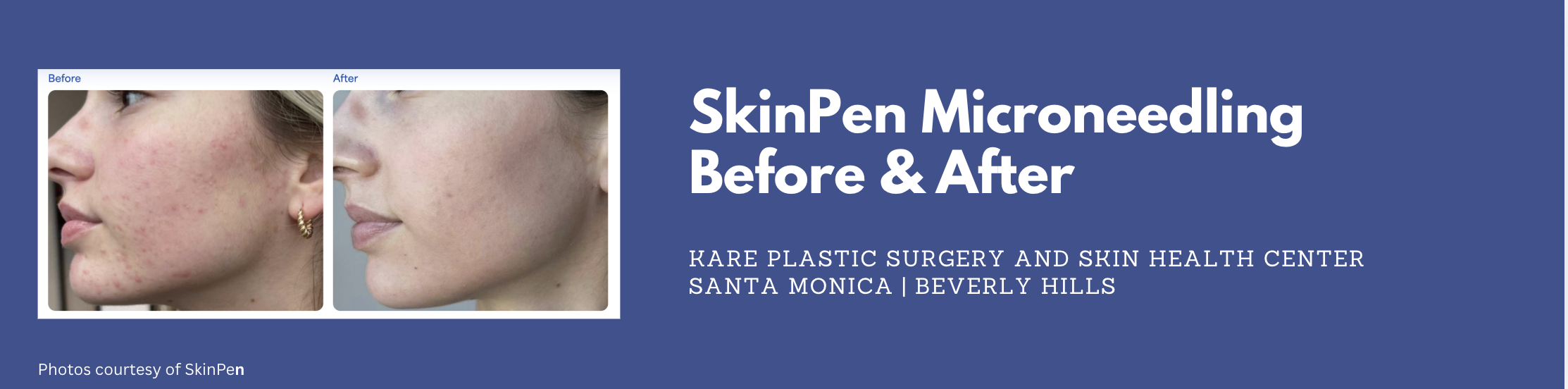
Microneedling for Acne Scars
Microneedling is particularly effective for acne scars, one of the most challenging aesthetic concerns faced by patients. Atrophic acne scars, including rolling scars, boxcar scars, and ice-pick scars, form when inflammation destroys collagen during active acne outbreaks. Collagen induction therapy directly targets this deficit by stimulating new collagen formation beneath depressed scars, gradually elevating and smoothing the skin surface. Over successive sessions, patients often notice improved skin texture, reduced pore size, and enhanced overall uniformity. Clinical studies report meaningful improvement in acne scar severity scores after three to six microneedling treatments, making it a foundational therapy for scar remodeling.
In addition to treating established scars, microneedling can also play a role in managing active cystic acne when appropriately performed under physician supervision. By enhancing transdermal delivery of targeted therapeutic agents and improving skin turnover, microneedling can help regulate sebaceous activity and reduce inflammation. Carefully selected treatment protocols allow delivery of anti-acne compounds directly into the epidermis, enhancing efficacy while minimizing systemic side effects. At Kare Plastic Surgery, treatments are customized to ensure safety and effectiveness, especially in patients experiencing inflammatory acne.
Hyperpigmentation and SkinPen MIcroneedling
Hyperpigmentation and uneven skin tone also respond well to microneedling. The controlled renewal of epidermal cells accelerates pigment dispersion while stimulating healthier keratinocyte turnover. Studies evaluating microneedling for melasma and post-inflammatory hyperpigmentation show improved pigment uniformity, particularly when combined with topical brightening agents. Because the epidermis remains largely intact, the risk of rebound pigmentation is lower compared with aggressive resurfacing modalities, making microneedling an excellent option for diverse skin types common in Southern California.
A key component of advanced microneedling at Kare Plastic Surgery is the use of SkinPen®, the first FDA-cleared microneedling device designed specifically for collagen induction therapy. SkinPen allows precise control over needle depth and treatment intensity, enabling customization for delicate areas such as the under-eye region as well as deeper dermal treatments for acne scarring. The device’s sterile, single-use cartridges ensure safety and consistency, while adjustable settings allow Dr. Karamanoukian to tailor treatments based on skin thickness, scar depth, and patient tolerance.
Modern microneedling has evolved beyond mechanical stimulation alone. Treatment boosters applied during or immediately after microneedling dramatically enhance results by leveraging the temporary microchannels created within the skin. These channels remain open for a limited time, allowing targeted delivery of regenerative compounds directly into the dermis.
Microneedling and PRP Treatment Boosters
Platelet-rich plasma (PRP) is one of the most popular microneedling enhancements. Derived from the patient’s own blood, PRP contains concentrated platelets rich in growth factors that accelerate healing and amplify collagen production. When combined with microneedling, PRP enhances tissue regeneration, improves skin radiance, and shortens recovery time. Clinical studies suggest that PRP-assisted microneedling produces superior improvements in acne scars compared with microneedling alone.
Microneedling and Exosomes
Exosome therapy represents another cutting-edge advancement. Exosomes are extracellular vesicles derived from stem cells that contain signaling proteins, growth factors, and genetic messengers that promote cellular communication and regeneration. Applied during microneedling, exosomes may enhance fibroblast activation, reduce inflammation, and support faster tissue repair. Patients often experience improved skin luminosity, smoother texture, and accelerated rejuvenation following exosome-enhanced treatments.
Polynucleotide stimulatory factors are gaining attention for their regenerative properties. These bioactive molecules support cellular repair, hydration, and tissue remodeling by stimulating fibroblast activity and improving extracellular matrix quality. When delivered through microneedling, polynucleotides can enhance dermal resilience and contribute to long-term skin rejuvenation.
Peptide-based boosters further expand treatment customization. Peptides act as cellular messengers that signal collagen synthesis, improve barrier function, and enhance skin repair. Targeted peptide formulations can address fine lines, loss of elasticity, and early aging changes while supporting overall dermal health.
For patients struggling with pigmentation concerns, hydroquinone and custom brightening formulations may be incorporated into treatment protocols. Microneedling enhances penetration of pigment-regulating compounds, improving outcomes for melasma, sun damage, and post-acne discoloration. Customized blends may include retinoids to stimulate cellular turnover, antioxidants to neutralize oxidative stress, and specialized brightening agents designed to create a more even complexion.
Treating Acne with Microneedling in Santa Monica
Patients with acne-prone skin benefit from custom formulations containing cystic-acne-targeting ingredients. These compounds help regulate oil production, reduce bacterial colonization, and calm inflammation while microneedling promotes healthy skin renewal. Scar-targeted formulations can also be used to optimize collagen remodeling in areas of fibrosis or uneven texture.
One of the major advantages of microneedling is its versatility and compatibility with other aesthetic treatments. At Kare Plastic Surgery, microneedling is frequently integrated into comprehensive skin rejuvenation plans. It complements routine dermatologic care by enhancing topical treatment efficacy and maintaining skin health between medical visits. When combined strategically with laser skin resurfacing, microneedling can improve texture while lasers address pigmentation and vascular concerns.
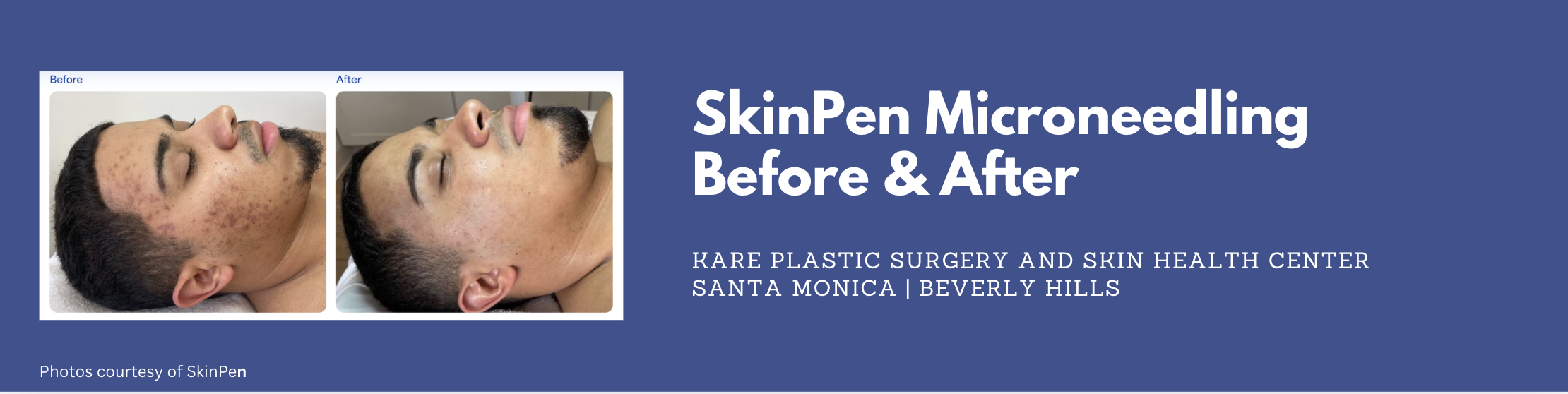
Botox with Microneedling
Neuromodulator treatments such as Botox injections work synergistically with microneedling by reducing dynamic wrinkles while collagen induction improves skin quality. Dermal fillers restore lost facial volume, whereas microneedling enhances the overlying skin’s texture and tone, creating a more natural and harmonious result. This multimodal approach allows patients to address aging from multiple biological angles rather than relying on a single treatment modality.
Recovery following microneedling is typically mild and predictable. Patients often experience redness similar to a sunburn for 24 to 72 hours, followed by subtle skin flaking as renewal occurs. Over subsequent weeks, collagen remodeling continues beneath the surface, leading to gradual improvements in firmness and clarity. Because treatments are minimally invasive, patients can resume normal activities quickly, making microneedling an ideal option for busy individuals seeking effective rejuvenation with minimal downtime.
Board-Certified Dermatologist and Board-Certified Plastic Surgeon in Santa Monica
The expertise of Dr. Raffy Karamanoukian is central to achieving optimal microneedling outcomes. As a board-certified plastic surgeon with extensive experience in skin resurfacing and regenerative aesthetics, Dr. Karamanoukian understands both the surgical anatomy of the face and the biologic processes underlying skin healing. Each treatment at Kare Plastic Surgery is customized after careful evaluation of skin type, scar patterns, pigmentation issues, and overall facial balance. Procedures are performed within a medically supervised environment, often in collaboration with the practice’s board-certified dermatologist, ensuring comprehensive and safe patient care.
Personalized treatment planning distinguishes professional microneedling from spa-based alternatives. Depth selection, treatment spacing, booster choice, and adjunctive therapies must be carefully calibrated to avoid complications and maximize collagen stimulation. Medical oversight ensures appropriate management of acne activity, pigmentation risk, and post-treatment skincare protocols.
As patients increasingly seek natural-looking rejuvenation, microneedling represents a shift toward regenerative medicine—stimulating the body to repair itself rather than relying solely on external interventions. By activating intrinsic healing pathways, microneedling improves skin quality at a cellular level, producing results that appear gradual, authentic, and long lasting.
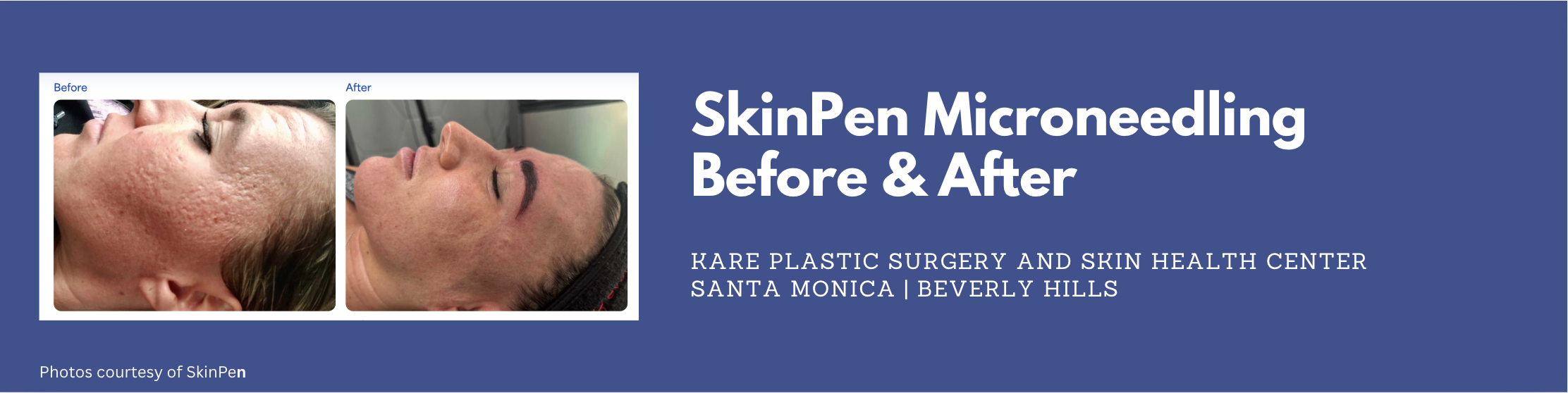
Top SkinPen Dermatologist in Los Angeles
SkinPen microneedling in Santa Monica at Kare Plastic Surgery offers an evidence-based, versatile solution for skin rejuvenation, acne scars, hyperpigmentation, and overall skin health. Through collagen induction therapy using advanced SkinPen technology and customized treatment boosters such as PRP, exosomes, polynucleotides, peptides, and brightening formulations, patients receive highly individualized care designed to optimize outcomes. Under the expertise of Dr. Raffy Karamanoukian and the supervision of a board-certified dermatologist, microneedling becomes more than a cosmetic procedure—it becomes an integral component of comprehensive aesthetic medicine. When combined with dermatologic care, laser resurfacing, Botox injections, and dermal fillers, microneedling helps patients achieve smoother, clearer, and healthier skin while maintaining a natural and refreshed appearance.